

Find Balance and Renewed Strength With Andre Panossian, MD in Pasadena
The emotional toll of NF2 can be overwhelming, as the prospect of managing tumors along the nerves in your brain and spine is no small task. Vestibular schwannomas and other tumors of the skull base and spine are managed by neurotology and neurosurgery. Dr. Panossian treats the peripheral nerve tumors of NF2 that lie outside the skull and spine, through surgical removal and reconstruction, and restores facial movement after acoustic neuroma surgery.
Understanding NF2
NF2 is a rare genetic disorder defined by bilateral vestibular schwannomas — tumors on the nerves that transmit sound and balance signals from the inner ear to the brain. These tumors, also called acoustic neuromas, develop on both vestibular nerves. In 2022, international consensus renamed the condition NF2-related schwannomatosis; NF2 remains the abbreviation in common use. NF2 also causes schwannomas along other cranial and spinal nerves, and peripheral nerve tumors outside the skull and spine. While the severity and progression of NF2 can vary among individuals, symptoms often manifest in early adulthood. They may include hearing loss, balance problems, ear ringing (tinnitus), and facial weakness or numbness. As NF2 progresses, these tumors can exert pressure on surrounding structures, potentially causing complications such as brainstem compression and neurological deficits. Early diagnosis and comprehensive management are crucial for optimizing outcomes and addressing the multifaceted challenges associated with NF2.
Diagnosis: Key Characteristics of NF2
Diagnosing NF2 involves careful evaluation of clinical signs and symptoms and genetic testing to confirm the diagnosis. While the diagnostic process for NF2 shares similarities with NF1, distinct features differentiate NF2. Key characteristics indicative of NF2 include the following:
In addition to clinical evaluation and imaging studies, genetic testing may be recommended to identify mutations in the NF2 gene located on chromosome 22, which confirm the diagnosis of NF2. Unlike NF1, which primarily affects nerve-supporting cells called Schwann cells, NF2 predominantly involves mutations in the NF2 gene, which encodes a tumor suppressor protein called Merlin. Loss of functional merlin protein due to NF2 gene mutations leads to uncontrolled growth of tumors arising from Schwann cells and other nerve cell types. The autosomal dominant pattern of inheritance observed in NF2 indicates that individuals inherit one mutated copy of the NF2 gene from a parent. However, in some cases, new mutations can arise spontaneously without a family history of the condition. Thorough clinical evaluation, imaging studies, and genetic testing are essential for accurate diagnosis and comprehensive management of NF2. Early detection and diagnosis are crucial for implementing appropriate treatment strategies and optimizing outcomes for individuals with NF2.
- Bilateral vestibular schwannomas, detected through imaging studies such as MRI or CT scans, are the hallmark feature of NF2. These tumors typically arise on both vestibular nerves, which control balance and hearing and may lead to symptoms such as hearing loss, balance issues, and tinnitus.
- Other cranial nerve tumors, including meningiomas, gliomas, or schwannomas, may also be present in individuals with NF2, contributing to a diverse array of neurological symptoms.
- Spinal tumors, such as schwannomas and meningiomas, can develop along the spinal cord, potentially causing neurological deficits and impairments.
- Cutaneous tumors, such as schwannomas and neurofibromas, may manifest on the skin, adding to the diagnostic profile of NF2.
- Ophthalmologic manifestations, such as cataracts, retinal hamartomas, or optic nerve gliomas, may occur in some individuals with NF2, affecting vision and eye health.
- Skeletal abnormalities, such as scoliosis, kyphosis, or sphenoid wing dysplasia, may be observed in individuals with NF2, contributing to the complexity of the condition.
- Additional features may include epilepsy, cognitive impairment, and various neurological deficits, further complicating the diagnostic picture and management of NF2.
Newly Diagnosed With NF2: Next Steps
Navigating a diagnosis of NF2 can feel overwhelming, but you do not have to face it alone. Your first step is to seek consultation with a knowledgeable neurologist or geneticist specializing in neurofibromatosis. Depending on the severity of your condition and specific findings, your healthcare provider may recommend further evaluation by a neurosurgeon to assess the need for surgical intervention, particularly for vestibular schwannomas or other brain tumors. Once stabilized, you may benefit from consultation with a plastic surgeon who specializes in neurofibromatosis to address peripheral nerve dysfunction, as well as any symptoms of pain or changes in appearance associated with the condition. Dr. Panossian brings extensive expertise in neurofibromatosis and facial paralysis reconstruction, offering innovative solutions to reanimate the face and restore function in individuals affected by NF2. With compassionate care and advanced treatment options, Dr. Panossian and his team are dedicated to supporting your journey toward renewed health and vitality.
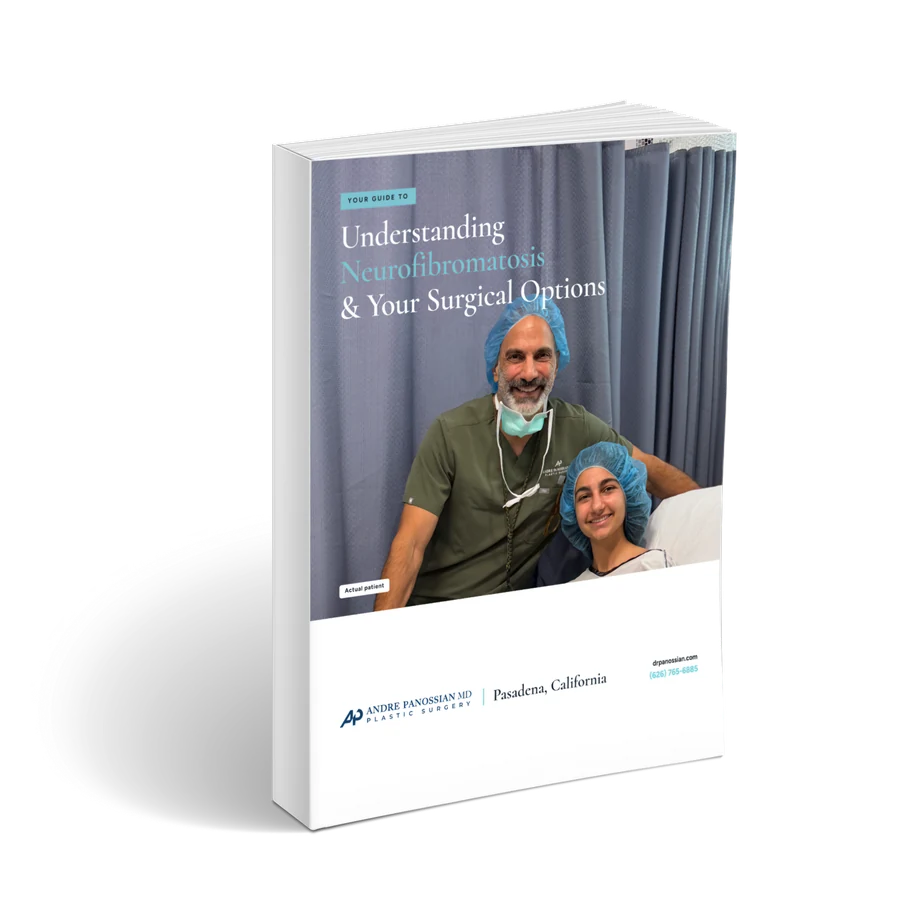
What to Expect From Neurofibromatosis Surgery
A plain-language guide to surgical treatment for neurofibromatosis — written for patients and families deciding whether surgery is the right next step, and what to expect if it is.
- What NF1, NF2-related schwannomatosis (formerly NF2), and schwannomatosis each involve
- When surgery helps, when it does not, and what success realistically means
- How cutaneous and plexiform tumors are approached differently
- Electrodesiccation, surgical excision, and staged reconstruction compared
- What recovery and recurrence actually look like
- Questions to ask any surgeon before proceeding
NF2 Treatments
NF2 requires specialized treatment approaches to manage its unique array of symptoms effectively. Dr. Panossian offers tailored treatment options designed to address the specific needs of individuals with NF2, aiming to alleviate symptoms, minimize complications, and enhance overall quality of life.
Vestibular schwannomas and other tumors of the skull base and spine are managed by neurotology and neurosurgery. Dr. Panossian's surgical role in NF2 is the removal and reconstruction of peripheral nerve tumors outside the skull and spine, and the restoration of facial movement after acoustic neuroma surgery, including with lengthening temporalis myoplasty. Removing peripheral nerve tumors can relieve pain, restore function, and improve appearance in the affected area.
Electrodesiccation is a specialized procedure used to treat cutaneous schwannomas (sometimes referred to as "neurofibromas") and other skin lesions characteristic of NF2. During electrodesiccation, high-frequency electrical currents are applied to targeted lesions, causing them to desiccate and shrink. Dr. Panossian employs this minimally invasive technique to reduce the size and number of schwannomas, improve skin appearance, and reduce associated symptoms such as itching and discomfort. With electrodesiccation, patients can experience enhanced comfort and cosmetic outcomes, improving their overall quality of life.
Following treatment for NF2, ongoing monitoring and imaging surveillance are managed by your neurologist and neurosurgeon. Dr. Panossian provides follow-up care for the peripheral nerve surgery and facial reanimation he performs, coordinating with your neurology and neurosurgery team as your treatment continues.
The Benefits of NF2 Treatment
Living with NF2 presents unique challenges, affecting both physical health and emotional well-being. Dr. Panossian provides comprehensive treatment options tailored to meet the specific needs of individuals with NF2, offering a range of benefits to enhance quality of life. The transformative benefits of NF2 treatment include the following:
- Improved Symptoms: Surgery for peripheral nerve tumors reduces pain and improves function in the affected area.
- Enhanced Aesthetics: Surgical interventions such as tumor resection and electrodesiccation techniques can improve the appearance of the affected areas, reducing tumor size and improving skin texture. This process enhances cosmetic outcomes and boosts self-confidence, improving emotional well-being.
- Improved Function: Removing peripheral nerve tumors relieves pressure on the affected nerve, which can reduce pain and restore function in the area supplied by it.
- Emotional Support: Coping with NF2 can be emotionally challenging, impacting self-esteem and mental health. Dr. Panossian and his team provide compassionate care and emotional support, addressing patients' concerns and empowering them to navigate their journey with confidence and resilience.
- Coordinated Care: Dr. Panossian works alongside your neurology and neurosurgery team, taking on the peripheral nerve surgery and facial reanimation while they manage the central and spinal disease.
Find Balance and Renewed Strength
Dr. Panossian is a board-certified plastic surgeon whose clinical focus includes neurofibromatosis surgery and facial nerve reconstruction. He completed fellowship training in pediatric plastic surgery at the Hospital for Sick Children in Toronto under Dr. Ronald Zuker.
Whether you are seeking answers about your condition or exploring surgical options, Dr. Panossian can help you understand your choices and develop a personalized treatment plan tailored to your unique needs.
Living with NF2 requires specialized care. Schedule a consultation with Dr. Panossian to explore your treatment options.