
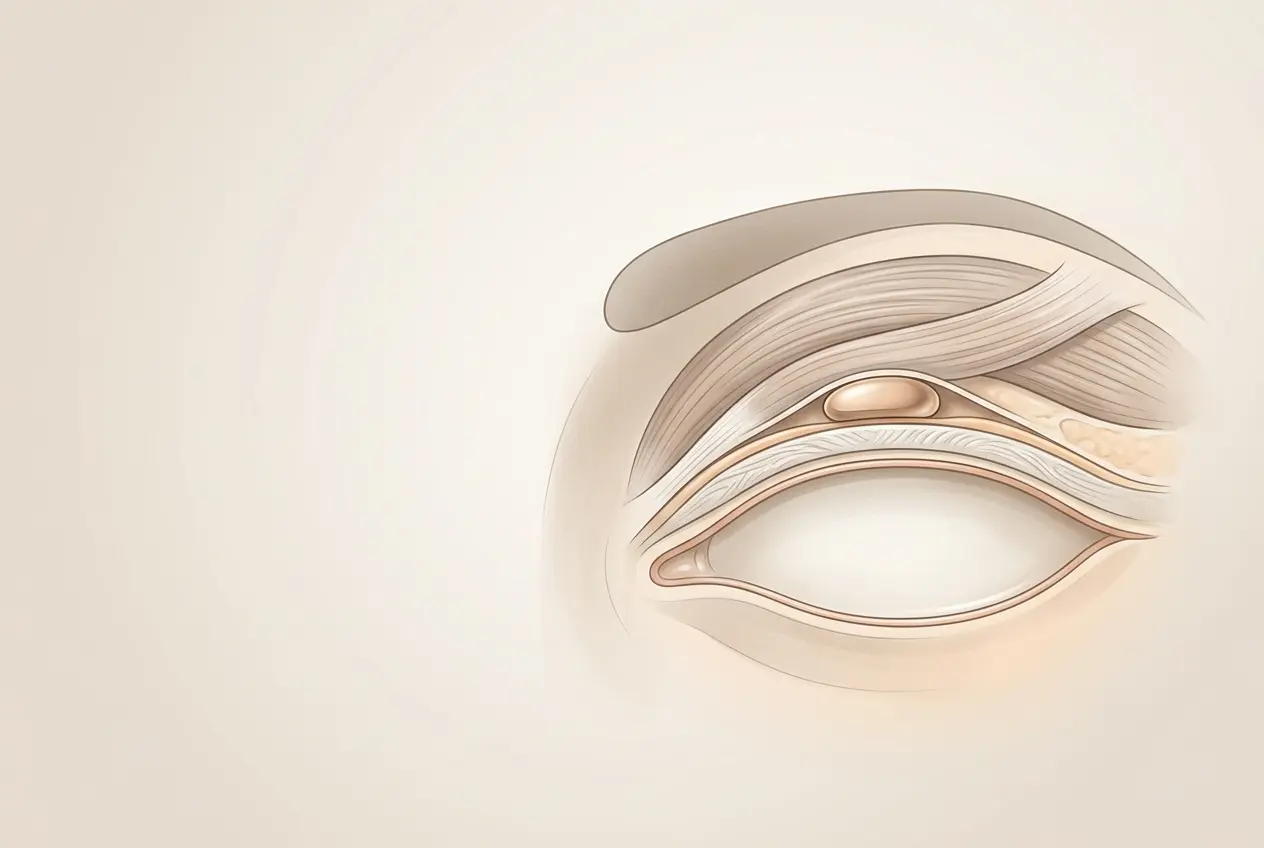
What is an upper eyelid weight?
In facial paralysis, the upper eyelid loses its ability to close on its own, leaving the eye open and the cornea exposed. This incomplete eye closure is called lagophthalmos, and it can lead to dry eye, corneal scarring, pain, and even loss of vision. An upper eyelid weight is a small, thin implant — made of either gold or platinum — that is placed inside the upper eyelid. The added weight uses gravity to help the eyelid come down and close, restoring protection to the surface of the eye.
The weight is sized for each patient individually. The amount of weight to be used is determined preoperatively by applying small trial weights to the upper eyelid to find the size that allows the most complete and comfortable closure. An upper eyelid weight is one component of eyelid surgery for facial paralysis, and because lagophthalmos involves both lids, it is frequently paired with a lower eyelid (ectropion) repair to support the lower lid as well.
Andre Panossian, MD's Deeper-Placement Technique
The key selling point of Dr. Panossian's technique is where he places the weight. A common problem with standard upper eyelid weights is visibility: because the eyelid skin is very thin, the implant can show as an obvious bulge or contour through the lid. This can look unnatural and is a frequent source of dissatisfaction with conventional placement.
To address this, Dr. Panossian places the weight in a deeper location within the eyelid. By positioning the implant deeper, he helps avoid the visible bulging that often accompanies standard eyelid weights — while still allowing the weight to do its job of bringing the eyelid down to close the eye. The result aims to combine reliable corneal protection with a more natural, less noticeable appearance. Platinum, which is denser than gold, can allow a smaller, lower-profile implant in some cases, further supporting a discreet result.
How is the upper eyelid weight placed?
An incision is placed in the natural upper eyelid crease so that it is well hidden. Working through this incision, Dr. Panossian creates a pocket in a deeper plane of the eyelid and centers the gold or platinum weight over the cornea. The weight is secured with sutures to prevent migration, and the incision is closed. Because the weight is sized in advance with trial weights, the implant placed is the one shown beforehand to give the best closure. The procedure is most often performed on an outpatient basis.
How is the recovery for an upper eyelid weight?
Surgery is typically performed on an outpatient basis. Stitches are usually removed between 5–7 days after surgery. Swelling of the eyelid can occur but typically resolves over the first week, and any bruising improves during the same time period. Activity is restricted during the first 4 weeks to light walking and stationary activities, with heavy lifting, contact sports, and aerobic exercise avoided during this time. Most adult patients elect to take approximately 3–7 days off from work, and makeup can be used to mask any bruising. Scar management is started at 3–4 weeks postoperatively to ensure excellent scar healing.
What are the risks and complications?
Complications are rare with upper eyelid weight placement for facial paralysis. Standard risks associated with all surgeries apply, including bleeding (hematoma), infection, or adverse reactions to anesthesia. Specific to eyelid weights, there is a possibility of implant migration or extrusion, visibility of the weight, or the need to exchange the weight for a different size to fine-tune closure. In adults, uncontrolled diabetes and smoking may affect healing and overall results, and there is always a risk of minor asymmetry and the possible need for revision. To minimize your risk, pay close attention to your surgeon's instructions before and after surgery. Dr. Panossian's staff is available at all times to clarify any pre- or postoperative instructions that you were given.
Protect Your Eye, Naturally
Dr. Panossian focuses his practice on facial reanimation and nerve reconstruction. He trained in facial reanimation under Dr. Ronald Zuker at the Hospital for Sick Children in Toronto.
Whether you are seeking answers about your condition or exploring surgical options, Dr. Panossian can help you understand your choices and develop a personalized treatment plan tailored to your unique needs. Explore the full range of eye-protection and reanimation options in our facial paralysis treatment overview.
A discreet, deeper-placed upper eyelid weight can help your eye close and protect your vision. Schedule a consultation with Dr. Panossian to learn more.