
What are nerve transfers?
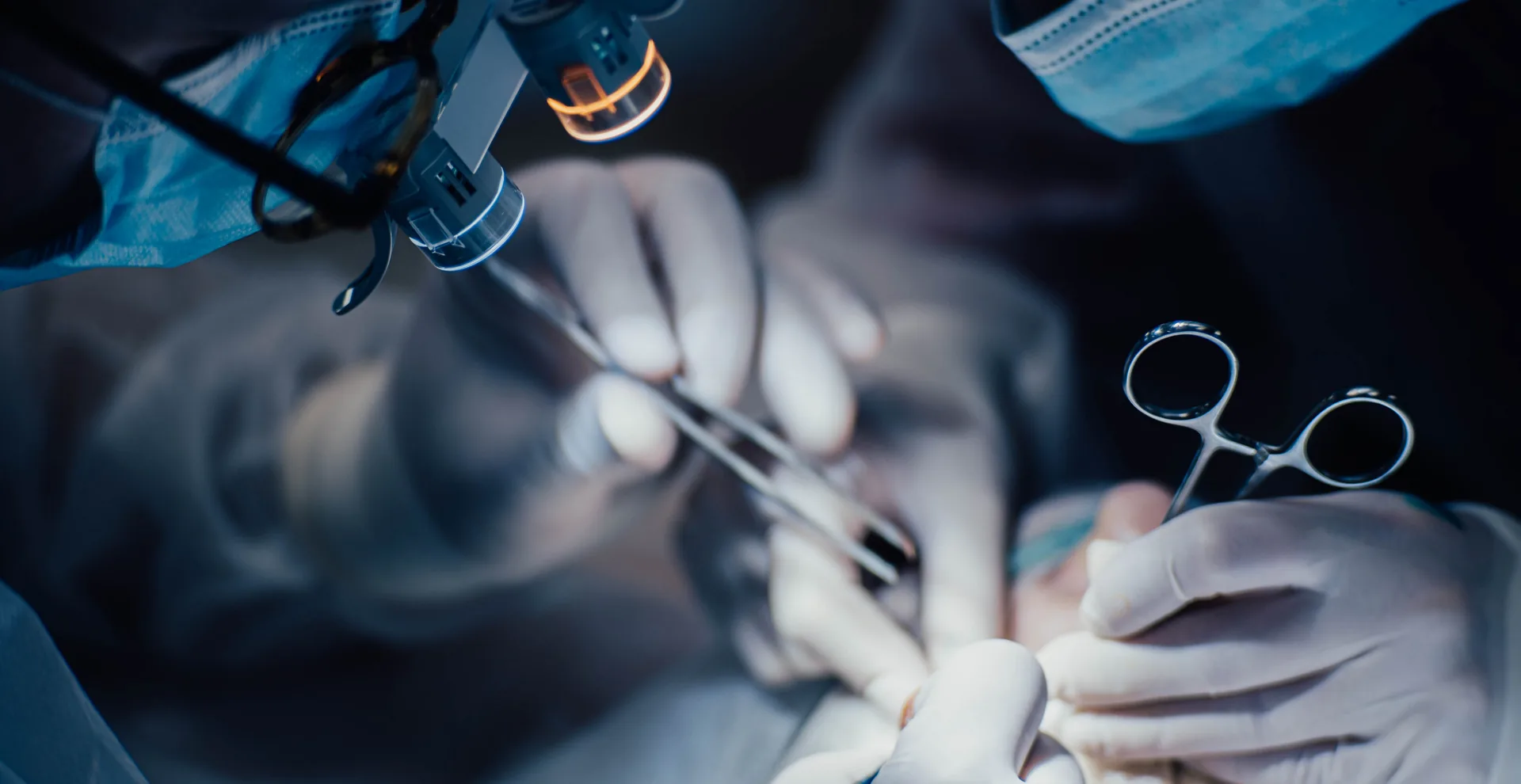
A nerve transfer is a microsurgical procedure in which a functioning motor nerve is surgically redirected to take over the role of the damaged or absent facial nerve. When the facial nerve itself cannot be repaired — because the proximal stump is inaccessible, the nerve has been destroyed by tumor, or too much time has passed for direct repair — a nerve transfer provides an alternative power source to drive facial muscle contraction.
The most commonly used donor is the masseteric nerve, which normally powers the masseter muscle used in jaw clenching. This nerve provides a strong, reliable motor signal that patients can learn to convert into a smile. Other donor nerves — including the hypoglossal nerve (tongue) and accessory nerve (shoulder) — may be considered in specific clinical scenarios. In many cases, nerve transfers can be combined with cross-face nerve grafts in a dual-innervation strategy, providing both volitional and spontaneous facial movement.
The Masseteric Nerve Transfer
The masseteric nerve — a branch of the trigeminal nerve (cranial nerve V3) — is the workhorse donor for facial reanimation nerve transfers. It is the most commonly used donor nerve in modern facial paralysis surgery, favored for its consistent anatomy, proximity to the face, and powerful motor signal.
When connected to the paralyzed facial nerve or a transplanted muscle, the masseteric nerve delivers a strong contraction signal that produces visible, meaningful facial movement. Initially, patients activate the smile by gently clenching their jaw — a movement that quickly becomes second nature and, over time, many patients develop a degree of spontaneity as the brain adapts to the new neural pathway.
Why the masseteric nerve?
The masseteric nerve is ideal for several reasons. It is anatomically close to the facial nerve branches, minimizing the distance nerve fibers must regenerate. It carries a large number of motor axons, providing a robust signal. It is expendable — the other muscles of mastication compensate fully, with no noticeable effect on chewing. And its signal can be activated voluntarily, giving patients immediate control over their new smile.
The Surgical Procedure
Under general anesthesia, Dr. Panossian identifies the masseteric nerve through a small incision in front of the ear. Using the operating microscope, the nerve is carefully dissected and transected. The donor nerve is then microsurgically connected (coapted) to the distal facial nerve branch — typically the buccal or zygomatic branch responsible for smile — or to a transplanted muscle such as the gracilis. The procedure is performed as an outpatient surgery, typically lasting 2 to 3 hours.
Learning to Smile Again
After a masseteric nerve transfer, patients initially activate their smile by gently clenching their teeth — the neural signal that once powered the masseter muscle now drives facial movement. With practice and physical therapy, this activation becomes increasingly automatic. Many patients report that within six to twelve months, their smile begins to occur more naturally — even in response to emotion — as the brain undergoes cortical adaptation. Specialized facial physical therapy plays a critical role in this retraining process.
Other Donor Nerve Options
While the masseteric nerve is the most common choice, Dr. Panossian evaluates each patient individually and may recommend alternative donor nerves based on the clinical situation.
- Hypoglossal Nerve (CN XII): Powers the tongue. Can provide a strong motor signal but may cause tongue weakness. Modern techniques use a partial hypoglossal transfer (30%) to minimize donor morbidity.
- Spinal Accessory Nerve (CN XI): Powers the trapezius and sternocleidomastoid muscles. Rarely used as a primary donor in modern practice due to potential shoulder weakness.
- Contralateral Facial Nerve (Cross-Face Nerve Graft): Uses a branch of the healthy facial nerve via a sural nerve graft. Provides spontaneous, emotion-driven movement but with a longer timeline and less powerful signal. Often combined with masseteric transfer for dual innervation.
- Dual Innervation Strategy: Combines a masseteric nerve transfer (for immediate, strong volitional smile) with a cross-face nerve graft (for eventual spontaneous movement). This approach harnesses the strengths of both techniques.
Who Is a Candidate for Nerve Transfer Surgery?
Timing, the cause of the paralysis, and the condition of the facial muscles all determine whether a nerve transfer is appropriate.
Nerve transfer is considered for patients with facial paralysis who have not regained meaningful function through conservative treatment such as physical therapy or medication. The procedure works best when performed within 12 months of onset, while the facial muscles remain viable for reinnervation.
Patients with congenital facial paralysis may be missing the facial nerve, its nucleus, or the nerve branches required for a transfer, which makes them unsuitable candidates. For paralysis of fewer than three weeks, Dr. Panossian may recommend facial nerve decompression or direct repair instead.
Candidates should be in good general health. Nerve transfer does not restore full facial function in every case, and realistic expectations are an important part of the decision.
Risks & Considerations
As with any surgical procedure, nerve transfers carry certain risks. Dr. Panossian discusses these thoroughly during consultation so patients can make fully informed decisions.
Procedure-Specific Risks
Minor Asymmetry: While the goal is symmetry, perfect mirror-image movement is not always achievable. The degree of movement on the reanimated side may differ slightly in strength, timing, or range compared to the healthy side.
Excessive Scarring: Internal scar tissue at the nerve coaptation site can impede nerve fiber regeneration, potentially reducing the quality of the final result.
Decreased Lip Movement: Depending on which facial nerve branches are targeted, some patients may experience subtle changes in lip movement or oral competence during the reinnervation process.
Incomplete Nerve Regeneration: While rare, some nerve transfers do not produce the expected degree of facial movement. The likelihood of this is minimized by careful patient selection, precise surgical technique, and appropriate postoperative therapy.
Standard Surgical Risks
Bleeding & Hematoma: As with any surgery, there is a small risk of postoperative bleeding or hematoma formation that may require drainage.
Infection: Surgical site infection is uncommon but possible. Prophylactic antibiotics and meticulous sterile technique minimize this risk.
Anesthesia Reactions: General anesthesia carries its own set of standard risks, which are discussed by the anesthesiologist prior to surgery.
Factors That Affect Healing
Diabetes: Diabetic neuropathy can impair nerve regeneration and overall wound healing. Patients with diabetes are counseled on optimizing blood sugar control before and after surgery to maximize outcomes.
Smoking: Nicotine constricts blood vessels and significantly impairs the microvascular environment essential for nerve regeneration. Patients who smoke are strongly advised to quit well before surgery and throughout the recovery period. Smoking cessation is one of the most impactful steps a patient can take to improve their surgical outcome.
Recovery & Rehabilitation
Recovery from a nerve transfer follows a predictable timeline, though the pace of progress varies by individual. The surgical recovery itself is relatively straightforward — most patients return to normal activities within two to three weeks. The more significant timeline is the nerve regeneration and retraining period.
The first signs of muscle contraction typically appear three to six months after surgery, as regenerating nerve fibers reach the target muscles. Early movement may be subtle — a slight flicker or twitch — and gradually strengthens over the following months. Full maturation of the nerve transfer can take 12 to 18 months.
Facial physical therapy is a cornerstone of the rehabilitation process. A specialized therapist works with the patient on neuromuscular retraining — teaching the brain to activate the new neural pathway and convert the donor nerve signal into natural-appearing facial movement. Biofeedback, mirror exercises, and progressive resistance training are all components of a comprehensive rehabilitation program.
Dr. Panossian monitors every patient's progress with serial clinical examinations and electromyography (EMG) testing, adjusting the rehabilitation plan as nerve regeneration progresses. Patients are seen regularly throughout the recovery period to ensure optimal outcomes.
Why Choose Andre Panossian, MD?
Nerve transfer surgery for facial paralysis sits at the intersection of microsurgery, neuroanatomy, and facial aesthetics — demanding a surgeon who understands all three at the highest level. The choice of donor nerve, the technical execution of the coaptation, and the strategic planning of potential dual-innervation approaches all require judgment honed through years of specialized training and experience.
Dr. Panossian's training under Dr. Ronald Zuker at the Hospital for Sick Children in Toronto is the foundation of his work in nerve-based facial reanimation. He performs masseteric nerve transfers, hypoglossal-to-facial transfers, and dual-innervation strategies such as the babysitter procedure.
Every nerve transfer Dr. Panossian performs is part of a carefully considered treatment plan. He evaluates each patient's unique anatomy, the cause and duration of their paralysis, and their personal goals to determine the optimal nerve transfer strategy — whether that is a standalone masseteric transfer, a cross-face nerve graft, or a combined approach designed to maximize both strength and spontaneity of movement.
Frequently Asked Questions
Will I be able to smile naturally after a nerve transfer?
With a masseteric nerve transfer, patients initially activate their smile through gentle jaw clenching. Over time, through physical therapy and cortical adaptation, the smile becomes increasingly automatic. Many patients develop a degree of spontaneous smiling — triggered by emotion rather than conscious effort — within 12 to 18 months. For patients seeking maximum spontaneity from the outset, a dual-innervation approach combining the masseteric transfer with a cross-face nerve graft may be recommended.
Will the nerve transfer affect my ability to chew?
The masseteric nerve is one of several nerves powering the muscles of mastication. While some patients notice a slight change in bite force on the donor side initially, the remaining muscles compensate fully. Studies consistently show no clinically significant impact on chewing function after masseteric nerve harvest. Most patients report no noticeable difference in their daily eating experience.
What is dual innervation and who is it for?
Dual innervation combines two nerve sources to power facial movement — typically a masseteric nerve transfer for strong, reliable volitional smile plus a cross-face nerve graft for spontaneous, emotion-driven movement. This strategy is particularly valuable for younger patients, those with high aesthetic expectations, and cases where the surgeon wants to provide both immediate function (via the masseteric nerve) and eventual spontaneity (via the cross-face graft). Dr. Panossian discusses whether dual innervation is appropriate during the consultation process.
How long does recovery take?
Surgical recovery is relatively quick — most patients return to work and normal activities within two to three weeks. The nerve regeneration timeline is longer: first signs of movement typically appear at three to six months, with continued strengthening and refinement over 12 to 18 months. Facial physical therapy begins when early innervation is detected and continues throughout the retraining period to maximize the quality and naturalness of movement.
Take the First Step
If facial paralysis has taken away your ability to smile, a nerve transfer may be the solution. Schedule a consultation with Dr. Panossian to discuss which approach is right for your specific situation.
Request a Consultation