
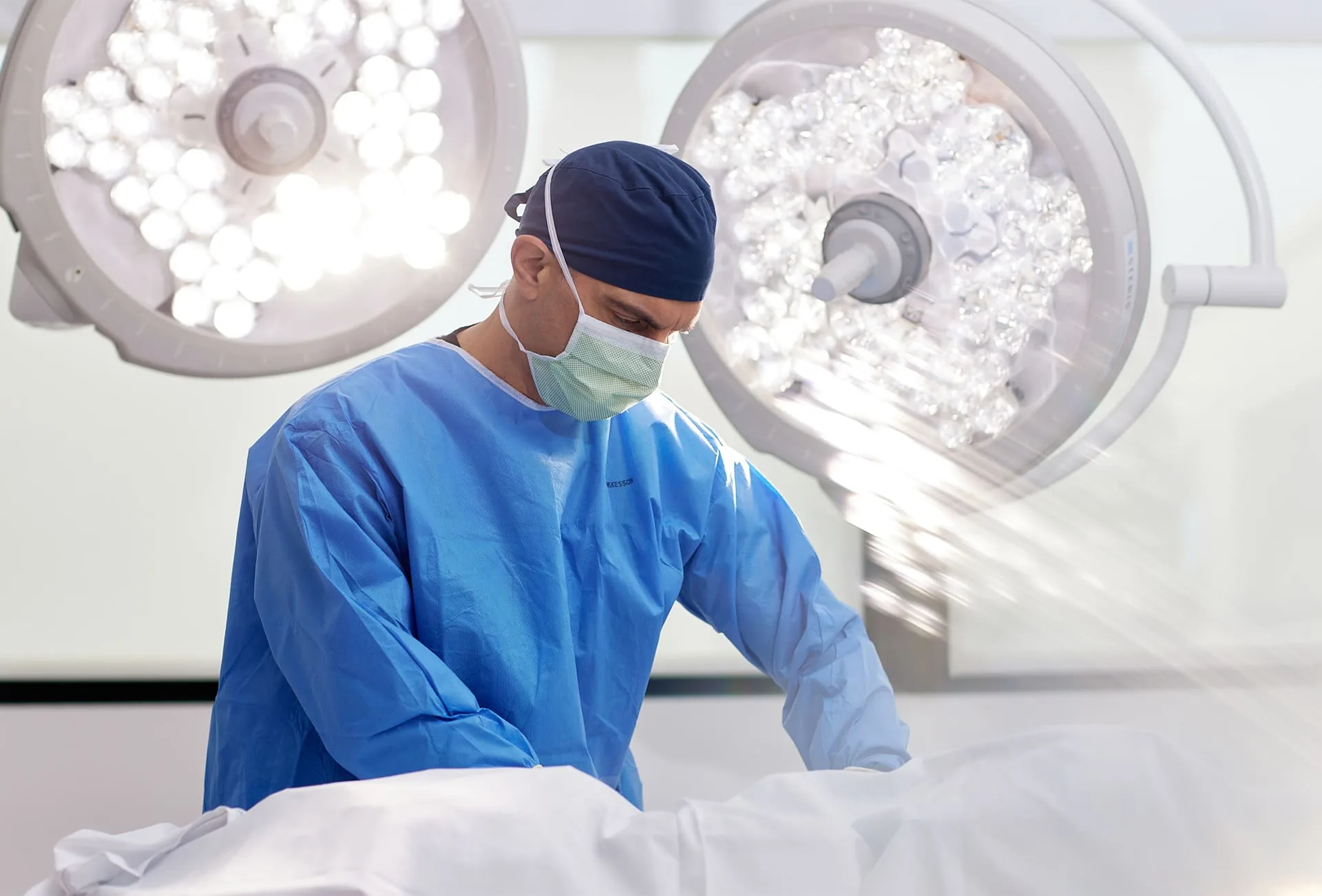
Compassionate Care for Neurofibromatosis Patients by Andre Panossian, MD
Dr. Panossian has been treating patients with neurofibromatosis in the Pasadena & Glendale area for more than a decade. He recognizes the unique requirements and challenges faced by individuals with NF.
Surgical Care for Neurofibromatosis
Dr. Panossian is a board-certified plastic surgeon in Pasadena, CA. His neurofibromatosis practice is surgical: removing tumors that cause pain, functional impairment, or visible change, and reconstructing what removal leaves behind. What surgery can and cannot achieve depends on tumor type, size, and location, and is discussed case by case.
What is neurofibromatosis?
Neurofibromatosis is a genetic condition that causes the development of tumors on nerves throughout the body. It is usually diagnosed in childhood. About half of patients inherit it from an affected parent; the rest arise from a new mutation with no family history. A parent who has NF1 has a 50 percent chance of passing it to each child. Currently, there are 3 types of neurofibromatosis identified. Dr. Panossian has been treating patients with neurofibromatosis for more than a decade. He recognizes the unique requirements and challenges faced by individuals with NF. His primary focus is in the surgical removal of NF tumors almost anywhere on the body, including major peripheral nerves. Throughout his approach, Dr. Panossian implements a logical surgical plan that takes into account the physiology of neurofibroma tumors. He frequently meets with patients from all over the world through seminars and conferences as well as virtual consultation. Dr. Panossian is always striving to improve surgical techniques to minimize scarring and to maintain long-term reduction of tumors.
Diagnosis of Neurofibromatosis
The diagnosis of neurofibromatosis is a multi-step process that involves a thorough evaluation of clinical symptoms, family history, and various diagnostic tests:
- Physical Examination: Identifying characteristic signs such as café-au-lait spots, Lisch nodules in the eyes, and the presence of neurofibromas.
- Genetic Testing: Crucial for confirming NF1 and NF2, especially in cases where symptoms are not definitive. Genetic counseling is often recommended to understand the implications of test results.
- Imaging Tests: MRI scans are pivotal in detecting tumors in the brain, spinal cord, and nerves. For NF2, detailed imaging of the auditory nerves is essential to assess the impact on hearing.
- Specialized Exams: Eye examinations to detect Lisch nodules and other ocular manifestations, and hearing tests for NF2-related auditory nerve tumors.
What do I do next?
If you are considering surgery for neurofibromatosis, the next step is a consultation. Dr. Panossian will review your imaging and history, explain what surgery can realistically accomplish in your case, and outline the risks.
Expert Care for People Living With Neurofibromatosis
Dr. Panossian has been treating patients with neurofibromatosis for more than a decade. He recognizes the unique requirements and challenges faced by individuals with NF. His primary focus is in the surgical removal of NF tumors almost anywhere on the body, including major peripheral nerves. Throughout his approach, Dr. Panossian implements a logical surgical plan that takes into account the physiology of neurofibroma tumors. He frequently meets with patients from all over the world through seminars and conferences as well as virtual consultation. Dr. Panossian is always striving to improve surgical techniques to minimize scarring and to maintain long-term reduction of tumors.
Types of Neurofibromatosis
Type 1 neurofibromatosis is the most common type with approximately 1 in 2,000 to 3,000 people having the condition. It is linked to a gene mutation, approximately 30 to 50 percent of individuals with the condition have no known family history.
Type 2 neurofibromatosis usually occurs within the central nervous system and the cranial nerves of the head and neck area. The main feature involves tumor formation along the 8th cranial nerve, called acoustic neuromas. Learn more about the diagnosis and treatment of Neurofibromatosis Type 2 (NF2) specifically.
This rare condition involves tumor formation on large peripheral nerves (such as the sciatic nerve) throughout the body. Schwannomas on both the hearing and balance nerves point to NF2-related schwannomatosis; a schwannoma on one side occurs rarely in schwannomatosis and does not by itself rule the diagnosis out. There are also no skin findings in most cases.
Neurofibromatosis Treatments
The mainstay of treatment, surgical excision is the primary intervention for neurofibromatosis. In simple terms, it involves surgically removing large tumors of the skin and underlying tissues through a traditional incision. However, there are many considerations in the treatment of individuals with neurofibromatosis. A strategy must be developed preoperatively for safe removal and for optimal results.
This newer treatment for neurofibromatosis targets the multitude of surface tumors that can occur in Type 1 NF. These tumors typically occur in patients who are in their 20's and 30's and continue to enlarge over time. They also multiply in number causing significant changes in appearance in some people. Electrodesiccation is a treatment that destroys tumors of a certain size by the hundreds.
Treatment Approaches
Neurofibromatosis care is usually shared among several clinicians. Dr. Panossian provides the surgical part; the rest is directed by the physician managing your overall care:
- Surgical Intervention: Removal of tumors causing pain, neurological deficits, or functional impairment. Dr. Panossian removes and reconstructs peripheral nerve tumors outside the skull and spine. Vestibular schwannomas and skull base and spine tumors are managed by neurotology and neurosurgery.
- Medications: Pain management and drug therapy such as selumetinib are prescribed by the physician managing your NF care.
- Regular Monitoring: Imaging and follow-up for new or growing tumors, coordinated by your neurologist or NF clinic.
- Physical and Occupational Therapy: For mobility and pain. Dr. Panossian can refer you when it is appropriate.
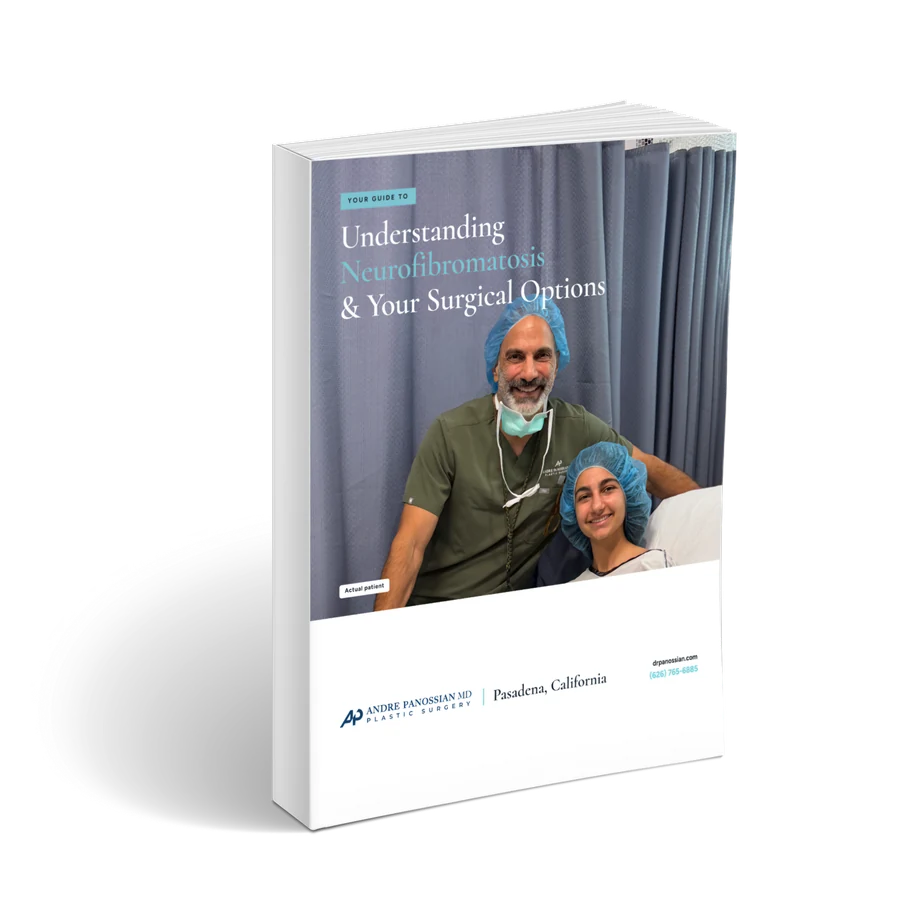
What to Expect From Neurofibromatosis Surgery
A plain-language guide to surgical treatment for neurofibromatosis — written for patients and families deciding whether surgery is the right next step, and what to expect if it is.
- What NF1, NF2-related schwannomatosis (formerly NF2), and schwannomatosis each involve
- When surgery helps, when it does not, and what success realistically means
- How cutaneous and plexiform tumors are approached differently
- Electrodesiccation, surgical excision, and staged reconstruction compared
- What recovery and recurrence actually look like
- Questions to ask any surgeon before proceeding
Frequently Asked Questions
Who treats neurofibromatosis?
Dr. Panossian, based in Pasadena, CA, specializes in the surgical treatment of neurofibromatosis. Patients often need care from a multidisciplinary team that may include geneticists, neurologists, and oncologists. Dr. Panossian’s approach is patient-centered, focusing on both symptom management and long-term well-being.
How common is neurofibromatosis?
Neurofibromatosis is relatively rare but not exceedingly so. Neurofibromatosis type 1, the most common form, affects approximately 1 in 2,000 to 3,000 people at birth. Early diagnosis and treatment are crucial for better outcomes.
How is neurofibromatosis diagnosed?
Diagnosis is generally based on clinical evaluation, family history, and specific diagnostic criteria. Dr. Panossian may recommend imaging tests like MRI scans to assess the extent of nerve tissue involvement. Genetic testing can also confirm the diagnosis and guide treatment options.
What is the main cause of neurofibromatosis?
The primary cause of Neurofibromatosis is genetic mutations. These mutations are often inherited but can also occur spontaneously. The mutated genes are responsible for regulating cell growth in the nervous system, and their malfunction leads to the formation of tumors.
What is the life expectancy of someone with neurofibromatosis?
Life expectancy can vary widely depending on the type and severity of Neurofibromatosis. While some individuals may experience a near-normal lifespan, others may face complications that could reduce life expectancy. Early diagnosis and proactive management are key to improving quality of life and longevity.
Expert Care for Neurofibromatosis
Dr. Panossian is a board-certified plastic surgeon whose clinical focus includes neurofibromatosis surgery and facial nerve reconstruction. He completed fellowship training in pediatric plastic surgery at the Hospital for Sick Children in Toronto under Dr. Ronald Zuker.
Whether you are seeking answers about your condition or exploring surgical options, Dr. Panossian can help you understand your choices and develop a personalized treatment plan tailored to your unique needs.
Dr. Panossian provides personalized surgical care for patients with all types of neurofibromatosis. Schedule a consultation to discuss your treatment options.