
Procedure Overview
- Procedure Type
- Single-Stage Muscle Transfer
- Condition Treated
- Chronic Facial Paralysis
- Operative Time
- 3.5 – 4.5 Hours
- Results Visible
- Immediately (in OR)
- Anesthesia
- General
- Return to Work
- 14 Days
- Award Recognition
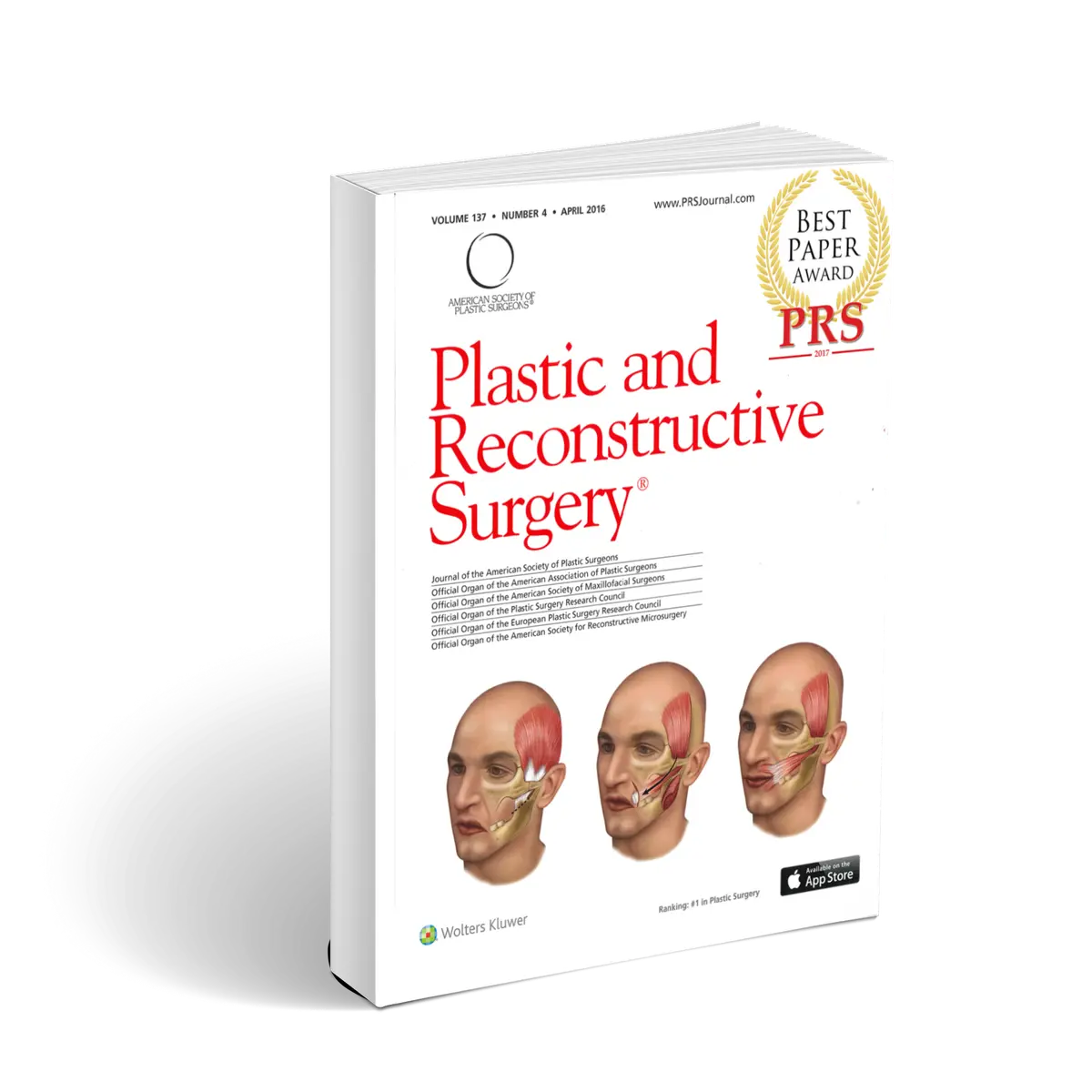
- Best Paper Award (2017), Plastic & Reconstructive Surgery and ASPS
- Location
- Pasadena, CA — Serving Nationwide
Smile Reanimation in Pasadena & Glendale
Facial paralysis does more than change appearance. It affects the ability to smile, speak clearly, eat, and close the eye on the affected side. Smile reanimation surgery transfers a working muscle to produce movement at the corner of the mouth, taking over the job the facial nerve can no longer do. Dr. Panossian performs these procedures for paralysis caused by acoustic neuroma surgery, trauma, tumor resection, Bell's palsy that has not recovered, and congenital conditions.
Dr. Panossian founded the Facial Paralysis Center at Children's Hospital Los Angeles. His paper on this procedure received the 2017 Best Paper Award from the Plastic & Reconstructive Surgery journal and the American Society of Plastic Surgeons.
Dr. Panossian Explains Temporalis Myoplasty
What is smile reanimation (temporalis myoplasty)?
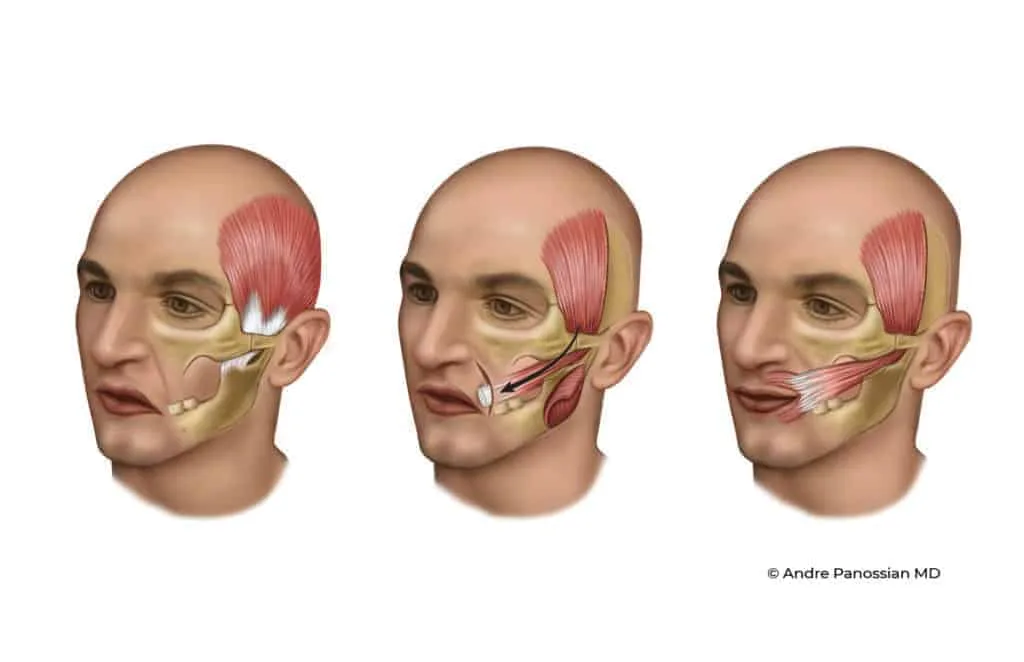
Smile reanimation, specifically through temporalis myoplasty, is a procedure designed to address facial paralysis by restoring facial symmetry and function. The temporalis muscle, originating from the side of the skull and extending to the lower jaw, plays a crucial role in biting and chewing. By leveraging its natural function, this procedure involves the transfer of the temporalis muscle to the corner of the mouth and upper lip, enabling the recreation of a dynamic smile.
Smile reanimation and facial reanimation procedures serve distinct purposes in addressing facial paralysis. While smile reanimation, particularly through techniques like temporalis transfers, is typically employed for chronic conditions associated with long-standing facial paralysis, facial reanimation procedures often focus on acute conditions or immediate post-injury interventions. Understanding this distinction is crucial in determining the most suitable treatment approach for each patient's needs.
Unlike the "temporalis tendon transfer," a more abbreviated version that redirects only the tendon, the lengthening temporalis myoplasty repositions the muscle in its entirety. Using the temporalis muscle for smile reanimation is not new (originally described by Dr. C.R. McLaughlin in 1953), but the lengthening temporalis myoplasty, described more recently by Dr. Daniel Labbé in 2000,1 is the technique that Dr. Panossian has extensively revised.
His modified version is performed in a single stage on an outpatient basis, uses incisions placed at the anterior hairline and along the line of a standard facelift, and does not require an intervening tendon or fascia lata graft.
1. Labbé D, Huault M. Lengthening temporalis myoplasty and lip reanimation. Plast Reconstr Surg. 2000;105(4):1289-1297.
How Dr. Panossian Modifies the Original Technique
- Single stage: muscle contraction is confirmed during surgery and voluntary smile movement typically develops over the first 1 to 3 months, with no wait for nerve regeneration.
- No grafts: the 90° muscle rotation supplies its own length, eliminating the intervening tendon or fascia lata graft.
- Refined incision placement: incisions follow the anterior hairline and the line of a standard facelift, which shortens and conceals the scars.
- Award-recognized: 2017 Best Paper Award (Plastic & Reconstructive Surgery and ASPS) for the paper describing this technique.
Additional Smile Reanimation
Treatment Options
In addition to temporalis myoplasty, several other treatment options are available for smile reanimation, each tailored to address specific cases of facial paralysis. While each treatment option has its benefits and considerations, the choice depends on factors such as the underlying cause of facial paralysis, the extent of nerve damage, and the patient's individual needs and goals. Consulting with Dr. Panossian is essential to determine the most suitable treatment plan for achieving optimal smile reanimation results.
Gracilis Muscle Transplant (Cross Face Nerve Graft)
The gracilis muscle transplant using a cross-face nerve graft is a two-stage procedure for restoring spontaneous, emotion-driven smiling. In the first stage, a sural nerve graft is tunneled from the functioning side of the face to the paralyzed side, connecting to a branch of the healthy facial nerve. After the nerve graft matures (typically 6 to 12 months, confirmed by a positive Tinel sign at the graft), the gracilis muscle from the inner thigh is transplanted to the face in a second microsurgical procedure. The transplanted muscle is connected to the matured nerve graft and facial blood vessels. Movement typically appears 3 to 12 months after the transfer, eventually producing a smile that is linked to genuine emotional expression. This approach is best suited for younger patients with long-standing facial paralysis who desire the most natural result possible.
Learn More →Gracilis Muscle Transplant (Masseter Nerve)
This single-stage alternative uses the masseteric nerve (the nerve that powers the jaw-clenching muscle) to innervate the transplanted gracilis muscle. Because the masseteric nerve is located on the same side as the paralysis and is immediately available, this approach eliminates the need for a preliminary cross-face nerve graft and the associated 6 to 12 month waiting period. The resulting smile is strong and reliable, though initially triggered by a gentle bite rather than spontaneous emotion. With practice and cortical adaptation, many patients develop increasingly spontaneous movement over time. This approach is particularly well-suited for older patients or those who prefer a single-stage solution with a powerful motor source.
Learn More →Cross-Face Nerve Graft
A cross-face nerve graft involves harvesting a sensory nerve (typically the sural nerve from the leg) and using it to connect a functioning facial nerve branch on the healthy side to the paralyzed side. This graft serves as a conduit for nerve regeneration, allowing signals from the healthy facial nerve to eventually reach the affected muscles or a transplanted muscle on the paralyzed side. While often used as the first stage of a two-stage gracilis muscle transplant, a cross-face nerve graft can also be performed as a standalone procedure in select cases of partial facial paralysis where some native muscle function remains. The nerve graft typically matures over 6 to 12 months before it can be used to power a muscle transfer.
Learn More →Nerve Transfers
Nerve transfers involve rerouting a functioning donor nerve to the injured or non-functioning facial nerve to restore movement. Common donor nerves include the masseteric nerve (from the jaw muscle) and the hypoglossal nerve (from the tongue muscle). This approach is most effective in relatively recent cases of facial paralysis — typically within 12 to 18 months of onset — when the native facial muscles are still viable and can be reinnervated. Success is sometimes still achievable up to 24 months. Nerve transfers offer a less invasive alternative to free muscle transplant, with shorter surgical time and recovery. However, outcomes depend on the quality and timing of the nerve repair, the health of the remaining facial muscles, and the patient's capacity for cortical adaptation. Dr. Panossian carefully evaluates each patient to determine whether a nerve transfer alone can achieve meaningful improvement or whether a muscle transfer will be required.
Learn More →The Benefits of Smile Reanimation (Temporalis Myoplasty)
Natural Smile Restoration
Temporalis myoplasty restores a natural-looking smile by leveraging the existing temporalis muscle. The result is a dynamic, authentic smile that moves with intention - not a static correction, but genuine facial expression.
Improved Symmetry
The procedure directly addresses the asymmetry caused by facial paralysis, bringing the paralyzed side into better balance with the functioning side. This improvement is visible both at rest and during animation.
Enhanced Facial Expressions
Beyond smiling, patients often find that the restored movement enhances their overall ability to communicate emotion through facial expression - improving social interactions and emotional connection with others.
Increased Confidence
The psychological impact of restoring a smile cannot be overstated. Patients frequently report a profound boost in self-confidence, social comfort, and overall quality of life following smile reanimation.
Long-Lasting Results
Because the procedure repositions a living muscle with its nerve and blood supply intact, the transferred temporalis does not depend on nerve regeneration to produce movement. Voluntary movement typically develops over the first 1 to 3 months and may continue to improve in the years that follow.
Personalized Approach
Dr. Panossian plans each temporalis myoplasty around the patient's anatomy, degree of paralysis, and goals for the smile. Muscle length, vector of pull, and the anchor points at the corner of the mouth differ from patient to patient.
Is smile reanimation right for me?
Smile reanimation (temporalis myoplasty) is ideal for individuals experiencing facial paralysis or weakness resulting from conditions such as Bell's palsy, stroke, or facial nerve damage. Common symptoms indicating a potential benefit from this procedure include difficulty smiling, asymmetry of the face, and limited facial movement.
Smile reanimation is considered for facial paralysis that has not recovered and is not expected to recover. Whether the lengthening temporalis myoplasty is the right operation depends on the cause and duration of the paralysis, the condition of the facial muscles, and whether the temporalis itself is working. Dr. Panossian makes that assessment at consultation.
At consultation, Dr. Panossian examines movement on both sides of the face, reviews prior imaging and operative reports, tests temporalis function, and reviews the reanimation options that apply, including the alternatives to this procedure.
What to Expect: The Temporalis Myoplasty Procedure
During a temporalis muscle transfer procedure, incisions are strategically planned along the hairline from the mid-forehead towards the sideburn, extending along the path of a standard facelift to the earlobe. Another incision is made at the lip-cheek junction (nasolabial fold) to anchor the temporalis tendon.
Once the patient is under anesthesia, the temporalis muscle is initially mobilized, completely released within its natural position in the temporalis fossa, suspended only by its nerve and blood supply. The zygomatic bone is temporarily detached to access the muscle tendon, and the portion of the mandibular bone to which the tendon is attached is disconnected, keeping the tendon intact. A tunnel is created to deliver the tendon and attached coronoid process through the nasolabial incision.
After separating the bone from the tendon, it is precisely inserted along the corner of the mouth and upper lip. The muscle is then rotated by 90 degrees to provide additional length to the tendon, termed "lengthening" myoplasty. This adjustment allows the muscle to reconfigure along its new position, providing maximum excursion without requiring additional grafts.
Once the muscle and tendon are secured in their new positions, the muscle is stimulated to confirm contraction and check the direction and extent of the movement, and the anchor points are adjusted as needed. Typically performed under general anesthesia, the procedure lasts approximately 3.5 to 4.5 hours and may be combined with other facial surgeries for symmetry. Drains and a thin pain pump catheter are often placed to manage postoperative fluid drainage and muscle spasms, improving comfort during recovery.
LTM vs. Gracilis Free Muscle Transfer: How to Choose
The two leading smile-reanimation options for chronic facial paralysis are the lengthening temporalis myoplasty (LTM) and the gracilis free muscle transfer. Dr. Panossian performs both and selects the approach that best fits each patient’s age, anatomy, and goals.
| Factor | Lengthening Temporalis Myoplasty (LTM) | Gracilis Free Muscle Transfer |
|---|---|---|
| Stages | Single stage | One or two stages (cross-face graft + muscle) |
| When movement appears | More immediate (1–3 months) | After nerve regeneration (typically 3–12 months) |
| Muscle source | Patient’s own temporalis (already innervated) | Gracilis muscle transplanted from the inner thigh |
| Smile trigger | Voluntary (bite/clench), adapts toward natural over time | Spontaneous/emotional (cross-face) or bite-driven (masseteric) |
| Microsurgery required | No free-tissue microsurgery | Yes — microvascular and nerve coaptation |
| Typical return to work | Up to 14 days | Generally longer; staged recovery |
| Best suited for | Patients wanting fast, single-stage, predictable movement | Younger patients prioritizing spontaneous, emotion-driven smile |
Temporalis Myoplasty Recovery
After undergoing temporalis myoplasty, patients can expect a period of recovery and healing. Initially, a bulky soft dressing and facial support garment are applied, with drains and tubes typically removed within the first two to three days postoperatively. We advise patients to follow a soft diet immediately after surgery, consisting of foods such as soups, yogurt, and well-cooked chicken, while avoiding foods that require hard or prolonged chewing (eg, raw vegetables, crusty bread, tough meat, nuts, and chewy candy) for approximately four weeks.
Swelling of the face and eyelids may occur but typically resolves within the first week, accompanied by bruising that diminishes over the same period. During the initial 4 to 6 weeks post-surgery, patients are encouraged to engage in light walking and stationary activities, avoiding heavy lifting, contact sports, and aerobic exercises. Many adults opt to take up to 14 days off from work during this time, with makeup available to mask any remaining bruising.
LTM alone is typically an outpatient procedure. When combined with other procedures, it may require an overnight stay. Physical therapy starts around three weeks post-surgery to promote temporalis muscle mobility, often involving visits to a facial paralysis therapist for exercises, biofeedback, and scar management to ensure optimal healing and muscle function over the following months.

Smile Reanimation Risks & Potential Complications
Smile reanimation carries the risks common to any surgical procedure, including bleeding (hematoma), infection, and adverse reactions to anesthesia.
Factors such as uncontrolled diabetes and smoking may impact healing and overall results in adult patients. Given the dynamic nature of the procedure, there is a slight risk of minor asymmetry and excessive scarring beneath the skin, which could potentially limit lip movement. Sometimes, a revision may be necessary to address such concerns, typically a minor procedure that can be performed under local anesthesia, frequently in the office.
It is essential to closely follow Dr. Panossian's pre- and postoperative instructions to mitigate these risks. Our staff can answer questions about these instructions.
Why Choose Andre Panossian, MD?
Dr. Panossian focuses his practice on facial reanimation and performs his personal version of the lengthening temporalis myoplasty, originally described by Dr. Daniel Labbé. If facial paralysis is affecting your smile, he can help you understand your options for smile restoration.
To find out whether smile reanimation applies to your case, schedule a consultation with Dr. Panossian. Bring any prior imaging, operative reports, and video of your face at rest and in motion.
Frequently Asked Questions
How soon will I see results after the LTM procedure?
With the LTM, muscle contraction is confirmed during surgery, and voluntary movement typically appears within the first 1 to 3 months. Unlike free muscle transfers that require months of nerve regeneration before any function appears, the LTM leverages the existing temporalis muscle, which is already innervated and functional. The smile continues to refine over the following weeks and months as swelling resolves and the patient adapts to the new movement pattern.
What is the difference between LTM and a temporalis tendon transfer?
While both procedures utilize the temporalis muscle, they differ significantly in technique and outcome. The temporalis tendon transfer is a more abbreviated version that redirects only the tendon. The lengthening temporalis myoplasty involves a more comprehensive repositioning of the muscle itself, offering greater excursion, more natural smile dynamics, and eliminating the need for an intervening tendon or fascia lata graft. Dr. Panossian's modified version is performed in a single stage on an outpatient basis, with incisions at the anterior hairline and along the line of a standard facelift.
Will the LTM procedure affect my ability to chew?
The temporalis muscle contributes to jaw closure and chewing function. After the procedure, some patients notice temporary changes in bite strength on the affected side. The masseter, the medial pterygoid, and the temporalis on the opposite side continue to close the jaw, and most patients adapt to the change over the first several months. Persistent difficulty with chewing is uncommon and should be reported. Dr. Panossian discusses these considerations in detail during your consultation.
Am I a candidate for LTM if I have already had a previous facial reanimation surgery?
Yes, in many cases. The LTM can serve as a revision or complementary procedure for patients who have had prior interventions that did not achieve the desired outcome. Dr. Panossian sees patients for second opinions and revision surgery. Evaluation starts with the prior operative reports and imaging, an examination of what movement is present, and an assessment of whether the temporalis is available and working. Each case is evaluated individually during a comprehensive consultation.
How long does the temporalis myoplasty procedure take?
The procedure typically lasts approximately 3.5 to 4.5 hours under general anesthesia. It may be combined with other facial surgeries for symmetry, which can extend the total operative time. Dr. Panossian will provide a detailed estimate based on your individual treatment plan during your consultation.
What is the recovery timeline after temporalis myoplasty?
Drains and tubes are typically removed within 2-3 days. Swelling and bruising resolve within the first week. A soft diet is required for approximately four weeks. Most adults take up to 14 days off from work. Light walking is encouraged during the first 4-6 weeks, with heavy lifting and aerobic exercise restricted. Physical therapy begins around three weeks post-surgery to promote muscle mobility and optimal healing.
Reclaim Your Smile
If facial paralysis has taken your smile, the lengthening temporalis myoplasty may be your path to restoration. Schedule a consultation with Dr. Panossian - in person or virtual - to learn whether this award-winning technique is right for you.
Request a Consultation